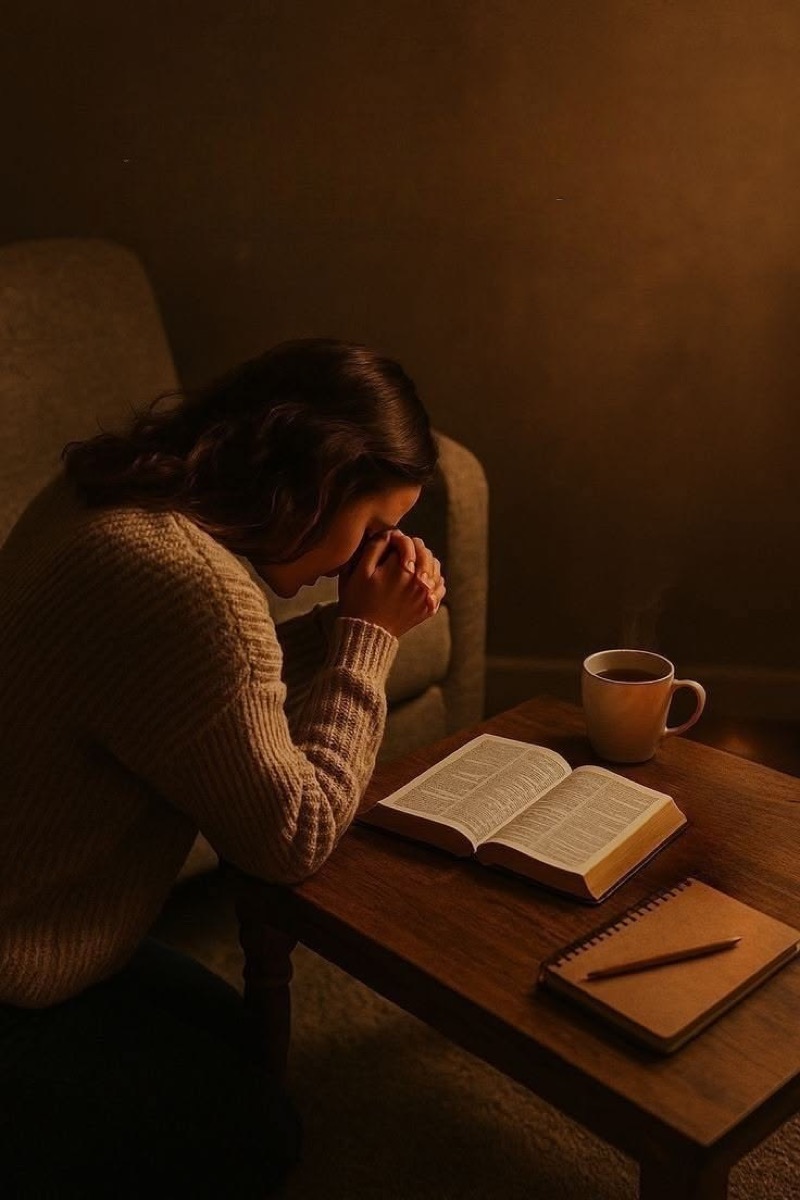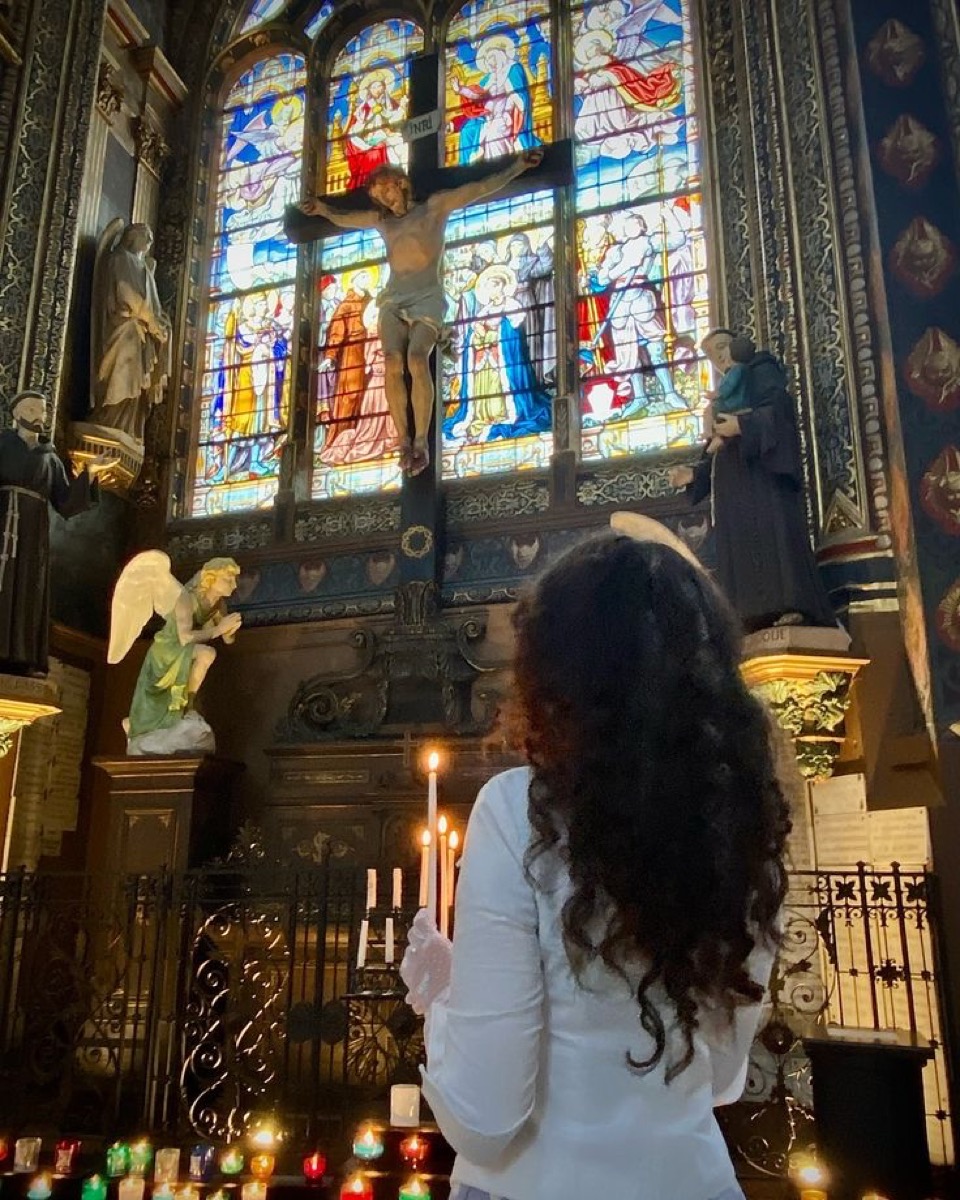
Each phase of your cycle carries its own spiritual invitation: rest during your period, renewal as energy returns, expectancy around ovulation, and patience through the luteal wait. Naming the season makes prayer specific instead of vague.
Ecclesiastes says there is a season for everything. Most of us apply that to years, jobs, and grief. Few of us apply it to the month we are actually living, even though a woman's body moves through seasons with remarkable regularity: roughly four phases, each with its own energy, its own temptations, and its own grace.
When you begin tracking your cycle, something quietly devotional happens. The chart stops being data and becomes a map of your seasons. And once you can name a season, you can pray it.
The menstrual phase: a season of rest
The cycle opens with bleeding, and often with fatigue. Modern life tells you to push through. Scripture tells a different story: even God rested, and He commands rest as a gift, not a weakness.
"Father, teach me to rest as You rested. Show me what You're renewing in me today."
Practical devotion for this phase: shorter prayers, earlier nights, and permission to say no. If journaling feels heavy, one honest line is enough.
The follicular phase: a season of renewal
As bleeding ends, estrogen rises and with it, often, energy, clarity, and appetite for beginnings. This is the natural season for starting things: a reading plan, a difficult conversation, a new habit of prayer.
Pray with expectation here. Ask what God is planting. The follicular phase is spring: seeds go in the ground quietly, before anything shows.
The ovulatory phase: a season of radiance
Around ovulation, many women feel most alive, most social, most confident. If you are hoping to conceive, this is also the season of the fertile window, and it can carry a weight of hope and fear at once.
The invitation of this phase is trust. You can chart faithfully, time things wisely, and still not control outcomes. Notice the signs He built into you, walk the window with intention, and hand the outcome back to Him.
The luteal phase: a season of waiting
After ovulation comes the longest and often hardest phase: the wait. Progesterone rises, energy turns inward, and for women trying to conceive, every day can become a question mark.
Waiting is one of scripture's oldest classrooms. Sarah waited. Hannah waited. Elizabeth waited. The luteal phase is a monthly apprenticeship in the same trust: bringing honest longing to God without letting it curdle into anxiety.
Practical devotion: keep the daily check-in, keep it short, and let the app's phase-matched verse meet you where you are. If PMS makes the last days raw, lower the bar. A held breath and a whispered Amen count.
Making it a rhythm, not a project
None of this requires a new spiritual discipline. It requires two minutes a day: an observation, a verse, a prayer. In Eve Rhythm, the daily check-in walks that exact path and ends with a press-and-hold Amen, a small physical act of assent that closes the day.
Over months, the effect compounds. You stop being surprised by your own seasons. You extend yourself the gentleness each phase asks for. And the cycle that once felt like an inconvenience starts to read like what it always was: a rhythm, written in you, worth praying through.